“MOHITORI” project by Noël Picaper
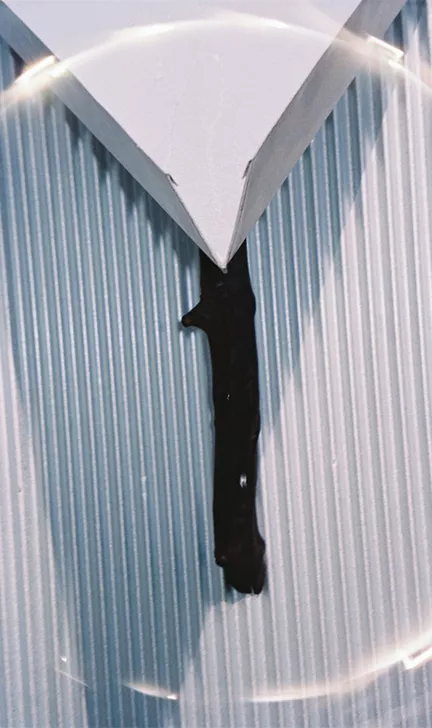
Between 2024 and 2025, Noël Picaper (2024, architecture) carried out the “MOHITORI” project, which brings to light the subtle traces of water flowing through Japan’s public spaces.
Phase 1/2: Research and Exploration
In 2024, Villa Kujoyama established a partnership with YAU (Yurakucho Art Urbanism), an initiative bringing together three organizations: the Daimaruyu Area Management Association, the Council for Area Development of the Otemachi, Marunouchi and Yurakucho District, and Mitsubishi Estate Co., Ltd. Through artistic events and installations, YAU seeks to activate the Yurakucho and Otemachi districts and foster new forms of engagement with the urban environment.
Bringing together Villa Kujoyama, YAU, and architect Noël Picaper (2024 resident), the MOHITORI project unfolds within the urban fabric of central Tokyo, exploring the transformation of public space in the post-pandemic era, marked by the widespread adoption of remote work.
These districts, largely shaped by the rhythms of office life, offer limited opportunities for open-ended uses and activities beyond working hours. Against this backdrop, the project sought to rethink ways of inhabiting the city: how can these spaces become more vibrant? How can they encourage social interaction and introduce artistic and architectural experiences into the everyday lives of office workers?
A Micro-Residency: A Period of Research in Tokyo
With the support of partners across Japan, Villa Kujoyama develops short residency programs (“micro-residencies”) lasting one to two weeks. As part of this program, Noël Picaper was invited to Tokyo in June 2024, where he collaborated with the YAU team as well as artists and architects from the University of Tokyo. Over the course of a week, he took part in workshops and discussions focused on the uses and perceptions of public space in Japan.
This micro-residency sparked a desire to create moments of surprise and reflection within the urban landscape. Picaper conceived a nomadic pavilion as a deliberately unusual presence—one capable of shifting everyday perceptions, rekindling a sense of attentiveness to one’s surroundings, and fostering new connections among passersby.
This research phase led to an initial proposal for the Kawabata Ryokudō promenade, located on the edge of the Otemachi district. Designed as a pause within the city, the pavilion reveals the subtle paths of water flowing through the urban landscape.
Phase 2/2: Post-residency and production
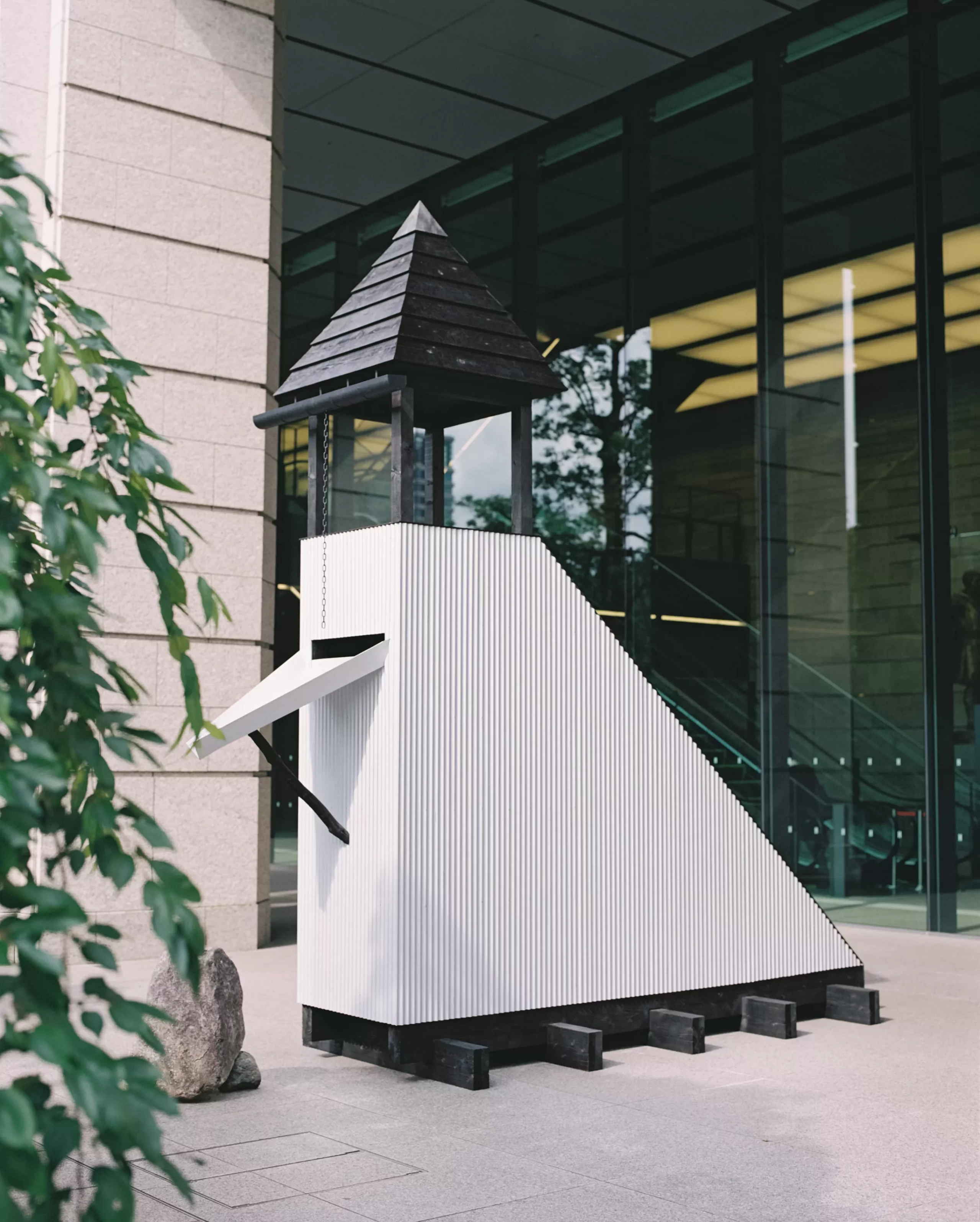
Thanks to the involvement of numerous Japanese collaborators, the MOHITORI pavilion gradually took shape. First installed at Hotoria Plaza, at the foot of an ENEOS office building in Otemachi and near a major subway entrance, the project was made possible through the architectural guidance and project supervision by Masato Ashida, Junpei Mori, and Ko Tsuruta; the collaboration with students from the University of Tokyo as part of their mobile exhibition project; the close cooperation with the teams at YAU and Matsumoto Kagu
A Mobile Exhibit
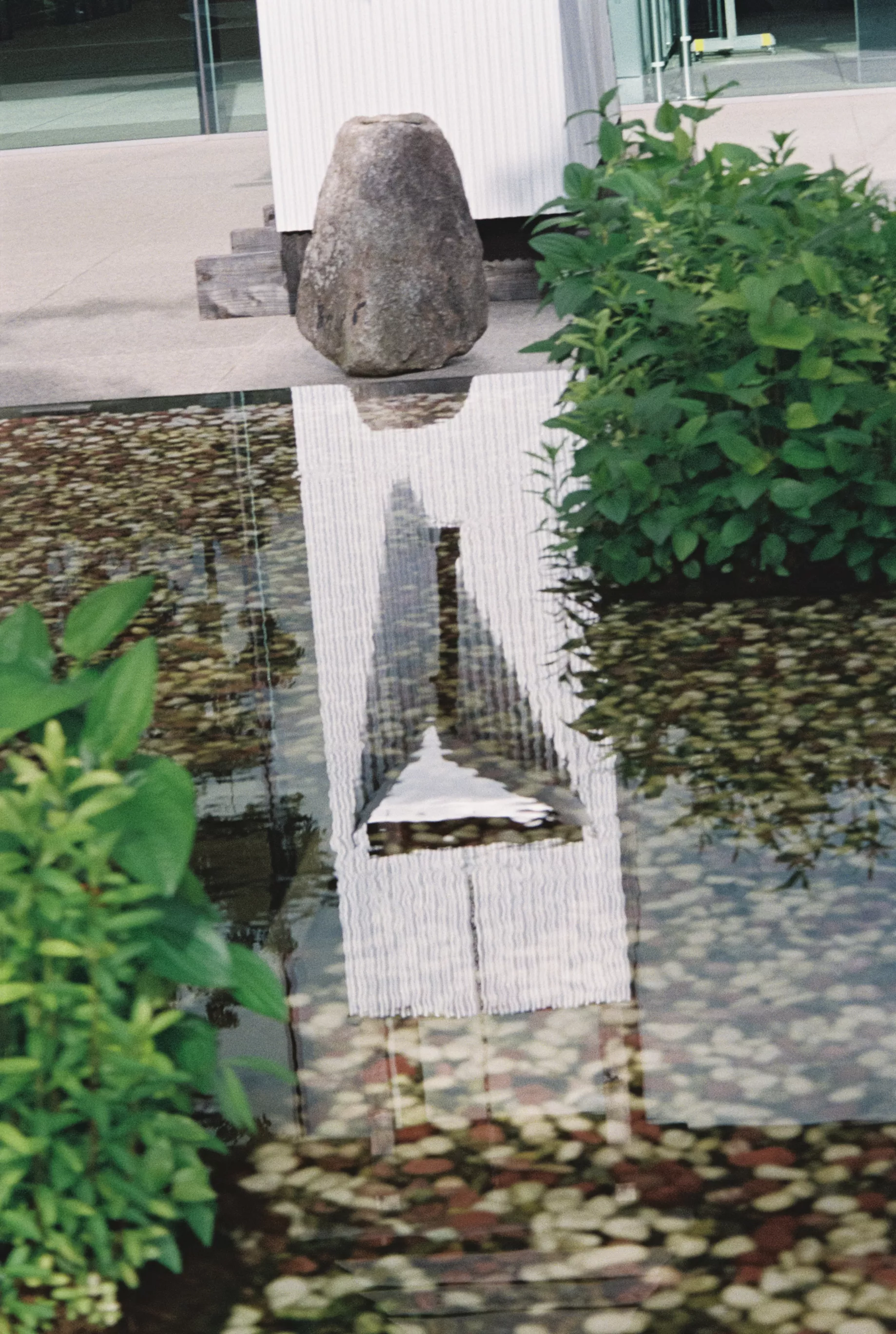
MOHITORI takes the form of a mobile micro-architecture that has several roles: an urban landmark, a sheltered observation point, and a space for water-related ritual. Conceived as a place for contemplation, the pavilion was presented at several locations across Tokyo:
-Hotoria Plaza (May 30 – June 15, 2025), as part of the Acting for the Living / Nuit de la Philo festival organized by Institut français de Tokyo, including a symbolic blessing ceremony led by the monk Yoshihiro Hasutani
– Jardin de l’Institut français de Tokyo (July 1 – October 25, 2025);
-Kawabata Promenade (October 27 – November 28, 2025), as part of a social research project conducted by YAU and the University of Tokyo.
Built through close collaboration with a wide range of Japanese professionals, this two-phase project—research followed by production—embodies a residency model grounded in cooperation, knowledge-sharing, and strong local engagement.
The project was jointly funded by YAU and Villa Kujoyama, with support from the Institut français, Institut français du Japon, and the Bettencourt Schueller Foundation.
Partner: Yurakucho Art Urbanism (YAU)
YAU (Yurakucho Art Urbanism) is an innovation platform centered on art that was launched on February 1, 2022. It aims to foster creative innovation in the city by bringing together artists, workers, companies, and visitors on equal footing, encouraging them to contribute their respective resources and perspectives.
The term “Art Urbanism” is derived from “Urbanism,” which refers to the practical exploration of urban life and city-making. It describes a condition in which art permeates both those who use the city and those who shape it. Based in the Ōtemachi–Marunouchi–Yurakucho (Daimaruyu) district—one of Japan’s leading business centers and a key junction connecting Hibiya and Ginza—YAU seeks to create a vibrant and inclusive creative scene for everyone who gathers there.
Organizers
Yurakucho Art Urbanism Executive Committee
- Daimaruyu Area Management Association
- Council for Area Development of the Otemachi, Marunouchi and Yurakucho District
- Mitsubishi Estate Co., Ltd.
Co-organizer
- Tokyo Metropolitan Government(Some programs are implemented jointly with the Executive Committee.)
Credits
© Ittetsu Matsuoka