Sasha Baydal
Dec. 2026

Presentation
Sasha Baydal (they/he) identifies as an interdependent art worker and an Eastern European kvir. Their practice as a researcher and curator centres on experiences of displacement and diasporisation, the cultural memory of the socialist past and memory loss, while drawing from a personal family history shaped by different forms of mobility. Their work is informed by postcolonial and queer theory, as well as decolonial approaches, and involves daily efforts in recollection, remembrance and decolonisation.
Sasha Baydal is the founder of, or a contributor to, numerous collectives. One, Beyond the post-soviet (Btps), focuses on producing and sharing knowledge of the cultural and geographic regions that were formerly referred to as post-soviet.
-
Sasha Baydal
Project
Whirlwind memories. A non-linear perspective connecting Eastern Europe, North-East Asia and Japan
Sasha Baydal’s project at Villa Kujoyama is a non-linear, trans-temporal exploration of the connections between Eastern Europe, North-East Asia and Japan. It sets the past and present of the disputed Kuril Islands side by side with recent migrations from Eastern Europe to Japan, and with the artistic trajectories that have connected these regions from the early twentieth century to the present. Its ambition is to bring out silenced voices, question the erasing of indigenous identities and cast a critical gaze over western representations; to be an attentive revisiting of historical events and artistic practices, and to contribute to the decolonial discourse from an East European perspective, through dialogue with indigenous voices and perspectives — that of the Ainu people in particular — and a critical re-reading of early-twentieth-century orientalist legacies.
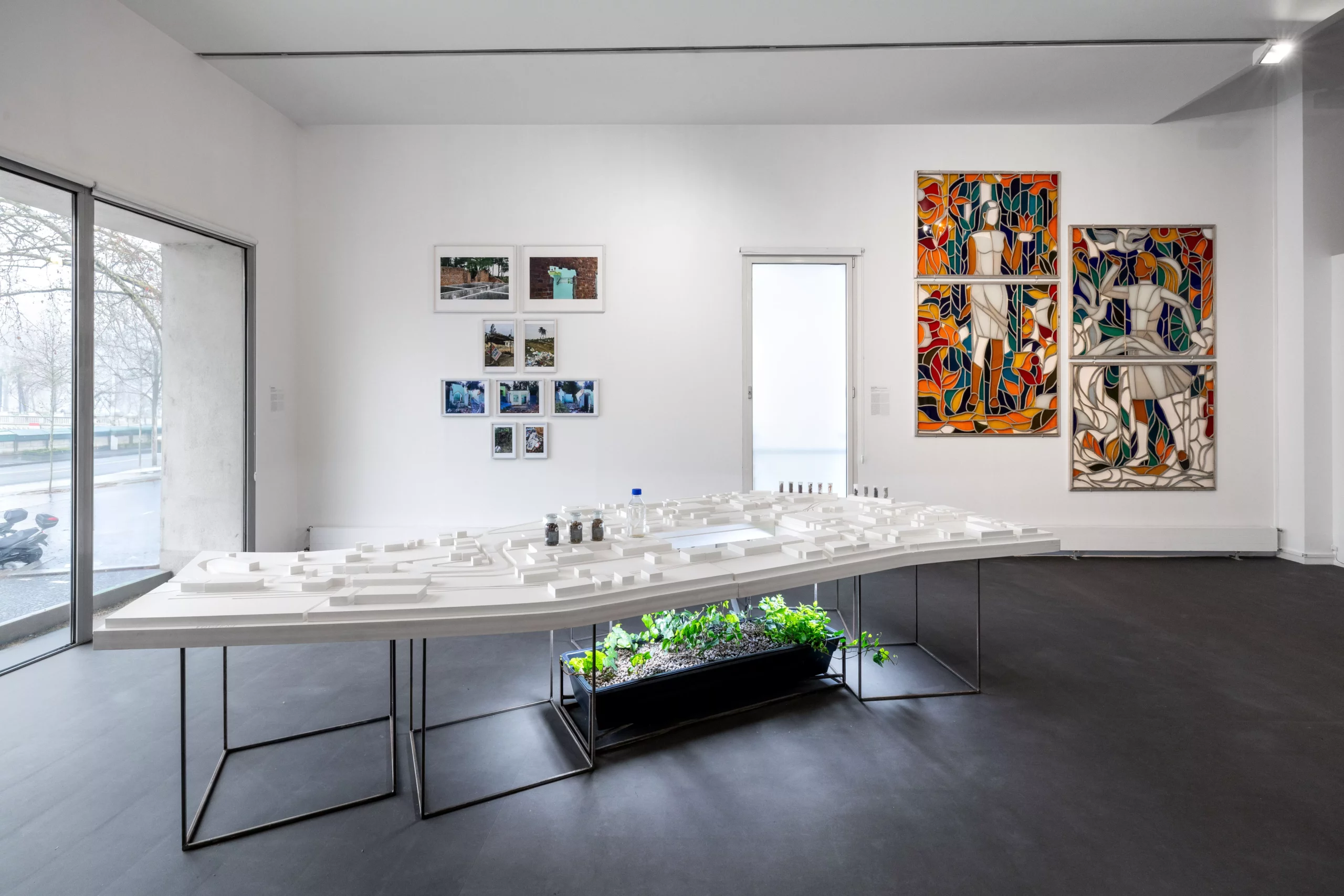
Exhibition view of Displacements and Torrents—Where the Dnipro and the Elbe Meet, curated by Sasha Baydal and Nataša Petrešin-Bachelez, Cité internationale des arts, Paris, 2024-2025. Photo: Romain Darnaud © ADAGP, Paris
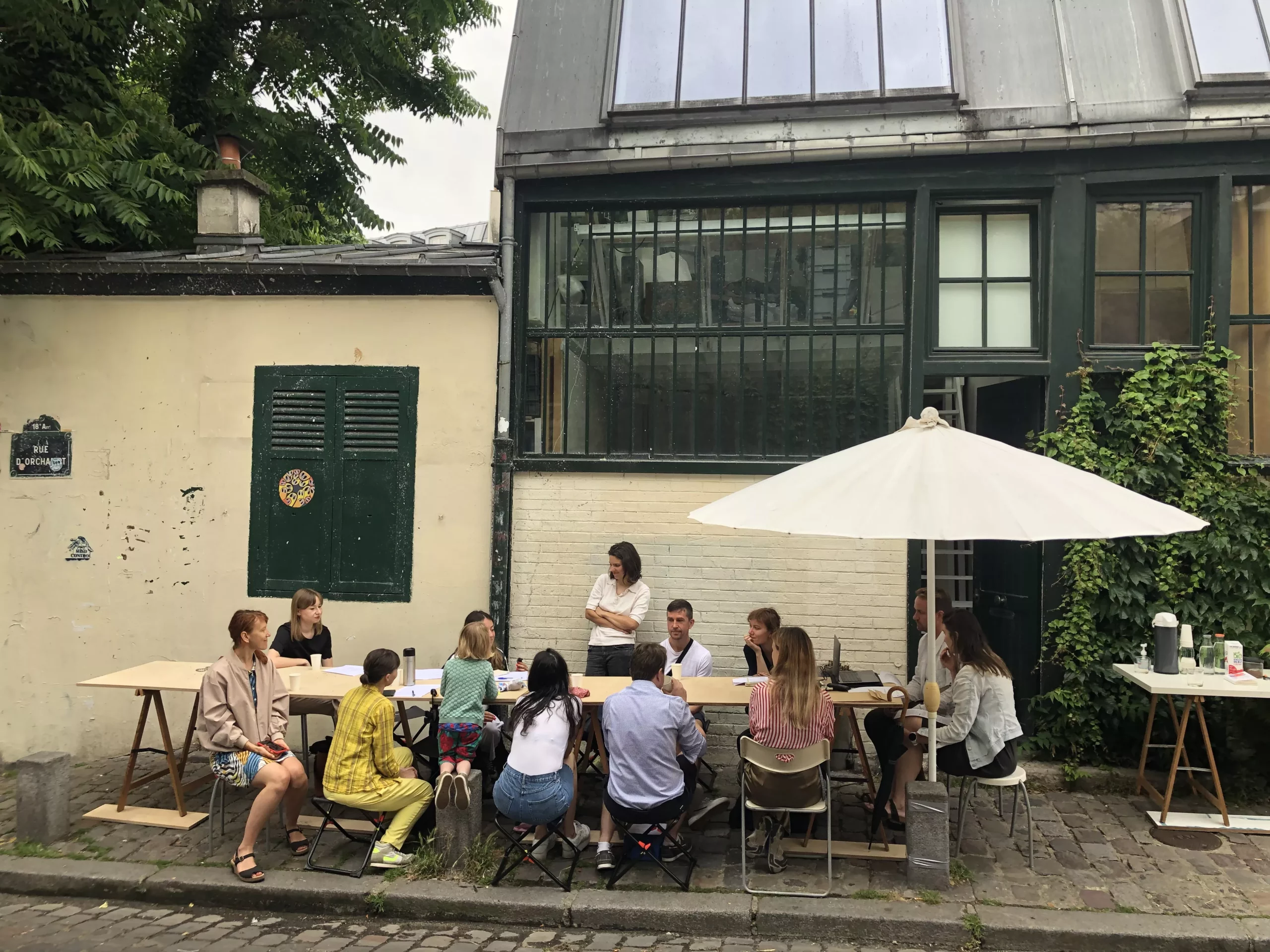
Launch of the collective Beyond the post-soviet, La maison de l'ours, Paris, 2021. Photo: Paolo Codeluppi